Calisthenics has an entry problem: almost all the content out there is made by someone who can already do twenty pull-ups, and written for someone who can already do five. If you cannot currently do one, that content is useless to you.
This guide assumes you are starting from zero: no equipment beyond a floor and a wall, no training history, and no idea what level you are at. Finding that out is step one.
Step 1 — Measure where you are
Do not start with a routine. Start with four tests, done on the same day with full rest between them. Write the numbers down: they are your baseline and the only way to know, a month from now, whether any of this is working.
| Test | What it measures | Record |
|---|---|---|
| Max push-ups in a row (wall, knees or floor — whichever you can do) | Pushing | Variation + reps |
| Hang from a bar | Grip and pulling | Seconds |
| Bodyweight squats in a row | Legs | Reps |
| Front plank | Core | Seconds |
Step 2 — Pick your rung in each pattern
If you would rather have it worked out for you, the level calculator turns those four marks into a score per chain, in the browser and with no account.
Calisthenics progresses by changing variation, not by adding weight. Each pattern has a ladder, and the only thing you need to decide today is which rung you stand on.
Pushing
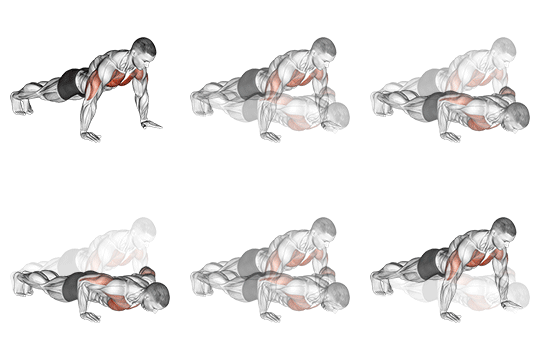
- Fewer than 5 wall push-ups: start with the wall push-up.
- More than 15 on the wall: incline push-up, hands on a table or countertop.
- More than 12 incline on a chair: knee or standard push-up.
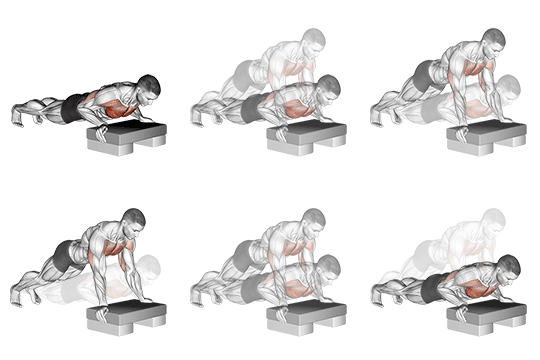
- More than 15 standard: decline, diamond, and the ladder continues well beyond that.
Pulling — the one you cannot skip
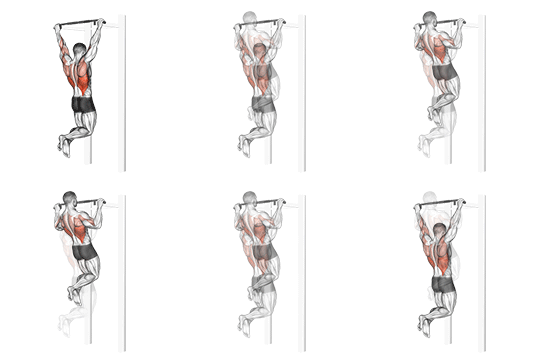
This is the hardest pattern to train at home because it needs a bar, and it is also the one most people skip. Skipping it is the fast route to rounded shoulders and an imbalance that eventually hurts.
- No bar: inverted rows under a sturdy table, plus resistance band work.
- Bar, no pull-ups yet: active hang → Australian pull-up → negatives.
- 1-3 pull-ups: pull-ups in sets of one or two, many sets.
A doorway bar costs less than a month of gym membership and unlocks half the discipline. It is the only purchase I would recommend up front.
Legs
- Chair squat (touch and stand) if the full squat is hard.
- Bodyweight squat through full range, thigh below parallel.
- Lunges and Bulgarian split squats once you pass 20 straight squats.
Core
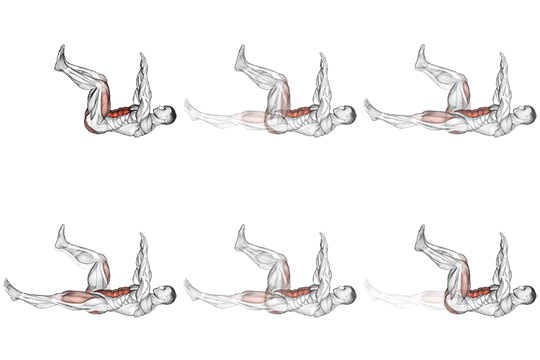
Plank and hollow body, not a hundred sit-ups. The core is trained by resisting movement, not by flexing the spine over and over.
Step 3 — The first routine
Three days a week with a rest day between. Forty minutes. This is all of it:
| Exercise | Sets | Reps |
|---|---|---|
| Your pushing variation | 3 | 8-12 |
| Your pulling variation | 3 | 8-12 |
| Your squat variation | 3 | 10-15 |
| Plank | 3 | 20-40 s |
| Bar hang (if you have one) | 3 | max |
Yes, it is short. That is the point. A ninety-minute routine you abandon in three weeks is worth less than a forty-minute one you keep for six months. Adherence is by far the strongest predictor of results in beginners.
Step 4 — How to progress
Each session, try for one more rep than last time in one of the sets. When you hit the top of the range in every set, move to the next variation and drop back to the bottom of the range.
That cycle — climb the reps, change the variation, start again — is literally the whole of progression in calisthenics. There is no further secret. The hard part is not understanding it; it is being honest about the criterion instead of sitting comfortably on the same rung for three months.
The five mistakes that make people quit
- Starting too high up the ladder. Chasing pull-ups you cannot do yet means weeks with no visible progress, and then quitting. Start where you are, not where you would like to be.
- Training six days in week one. Early enthusiasm produces three days of soreness and then a stop. Three days, sustained, wins every time.
- Recording nothing. Without a log you cannot tell whether you are progressing, and subjective feel lies. A note on your phone is enough.
- Skipping pulling work. Said twice now because it is the most expensive mistake in home calisthenics.
- Changing routine every two weeks looking for the perfect one. It does not exist. The routine you follow for three months beats the optimal one you drop after two weeks.
What to actually expect
- Weeks 1-2: soreness and clumsiness. Reps climb fast, and that is coordination, not muscle.
- Weeks 3-6: first real jump in reps. Usually the first variation change.
- Weeks 6-12: visible changes in shoulders and back. The first pull-up often lands here if you trained pulling.
- Month 4 onward: progress turns irregular and starts depending on load management, sleep and food.
Do you need an app for this?
No. Everything above can be done with a note on your phone, and plenty of people do exactly that for years.
What CalisthenAI solves is the deciding part: which rung you are on in each of the five patterns, and when to move up. The strength test scores each chain from 0 to 100 and the routine is built from the variations that match those numbers, so you do not have to judge it yourself. It is free, and that part does not require Pro.
If you would rather do it by hand, the exercise library has the full ladders ordered by real difficulty from 5 to 100, with execution notes and common mistakes for each. Start there and come back when you hit your first pull-up.