AI routines
A plan written for your exact score, your equipment and your days.
IACalisthenAI measures your real strength with tests, turns it into a score from 0 to 100 and writes the session you should do today. When you improve, the routine rewrites itself.
Free download · Pro optional from €4.99/month
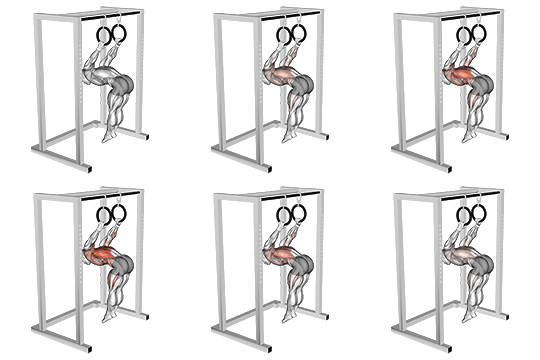
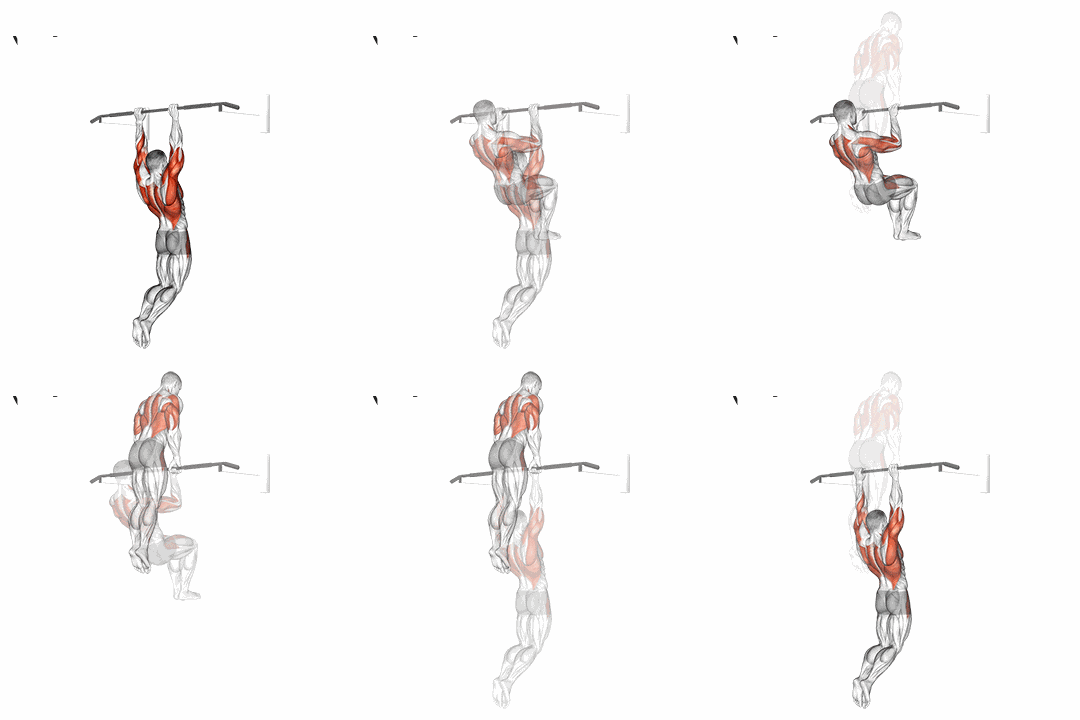 Strict Muscle-up
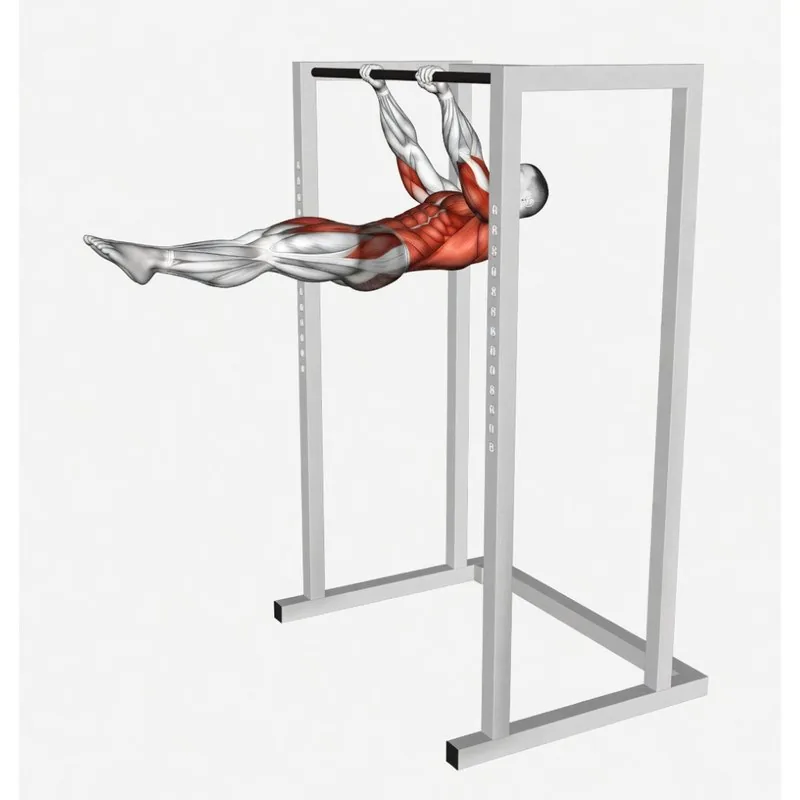
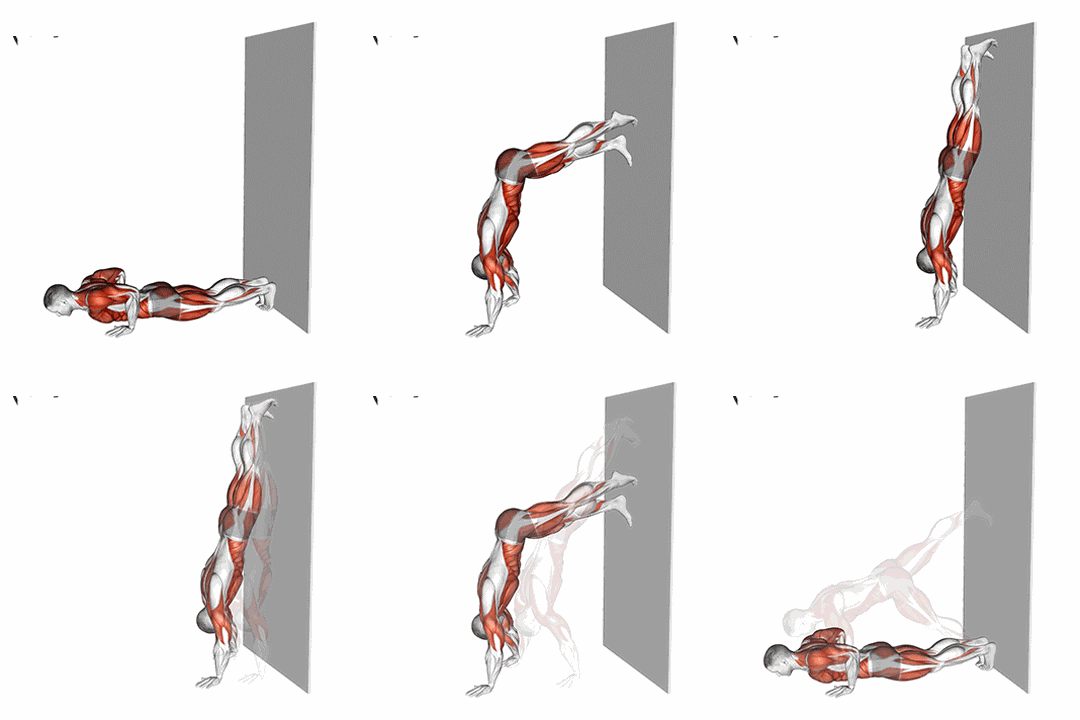
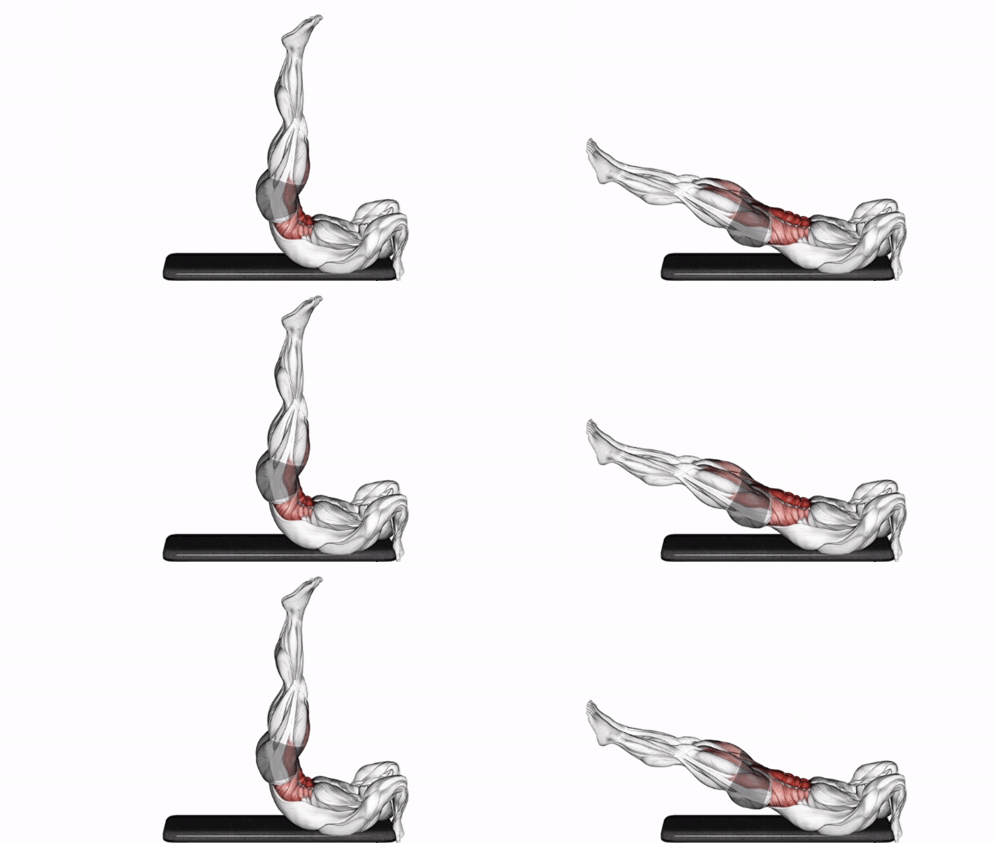
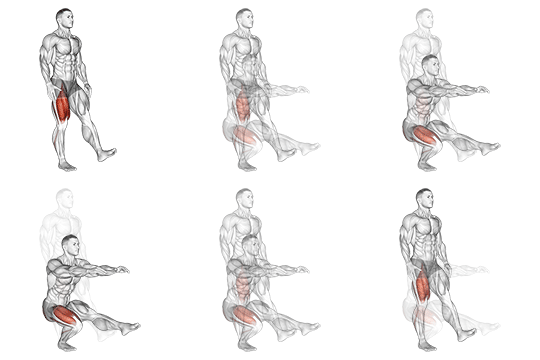
Most calisthenics apps hand you a fixed plan. It works for three weeks: first it is too hard, then it is too easy. Bodyweight is not adjusted with plates — it is adjusted by changing the exercise, and that requires knowing exactly where you are.
There are fourteen steps between an incline push-up and a one-arm push-up. Picking the wrong one means stalling or getting hurt.
You can do 15 pull-ups and still fail a single-leg squat. One "intermediate" label hides exactly what you need to fix.
The stimulus that drove progress stops mattering the moment you adapt to it. Without measuring again, there is no way to know when that happened.
The whole loop fits in an afternoon. After that, the app takes over.
Five exercises per chain — push, pull, legs and core. Max reps on each. It takes under twenty minutes.
Each chain gets a 0–100 score on an asymptotic curve: climbing from 80 to 90 costs far more than 20 to 30, exactly like real life.
From your score, the equipment you own, the days you train and the minutes per session, it builds a plan with the exact rungs you belong on.
You log the sets, the app sees where you are gaining and where you are not, and tells you when to retest. The routine is rewritten with the new data.
None of them is an extra. The test feeds the AI, the AI feeds the log, the log feeds the test.
A plan written for your exact score, your equipment and your days.
IAFour chains, a 0–100 score on each.
Nine body metrics and three postural angles from a single photo.
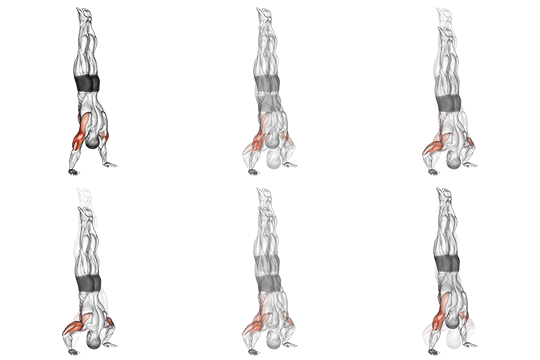
IAThe full chain to muscle up, planche, front lever or handstand.
Twenty-eight achievements across five rarities, and a streak that really breaks.
A workout feed, followers, and a free Pro month for inviting friends.
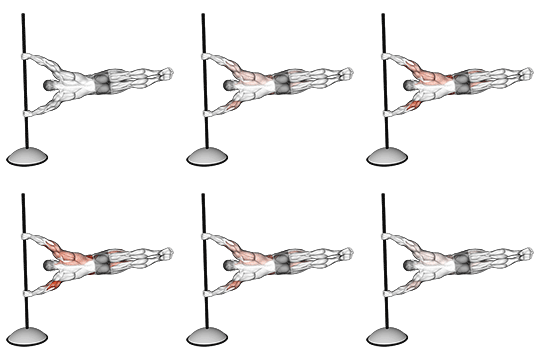
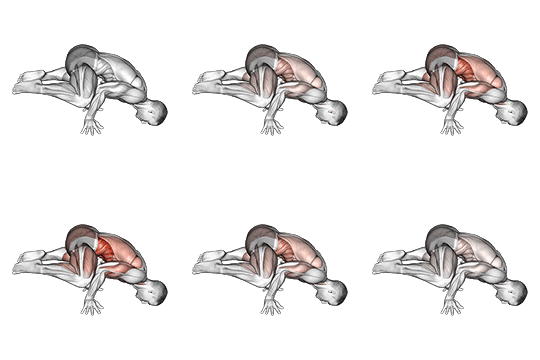
Each one has its own progression chain, with the animation for every rung and the exact criterion for moving up. Not "when you feel ready" — when you hit the number.
MediaPipe Pose extracts the body geometry, Gemini reads the image and DeepSeek reasons over the numbers. You get definition, mass, symmetry, V-taper, shoulder-to-waist ratio, adonis ratio and spine, head and pelvis deviations.
Pro feature. Photos are processed for the analysis and are never published anywhere.
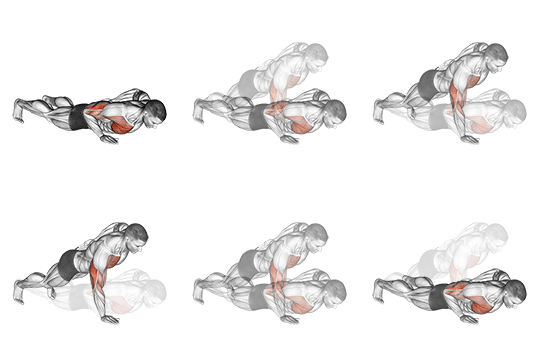
From the wall push-up to the hefesto. Every entry has execution, common mistakes, muscles worked and which rung comes next.
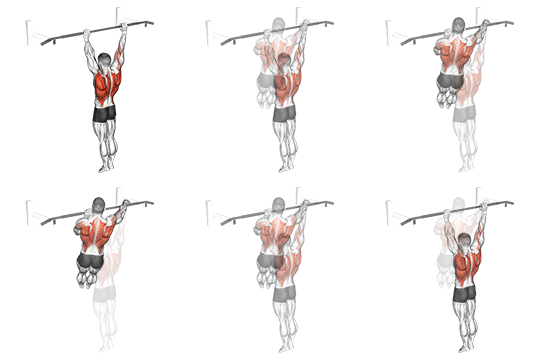
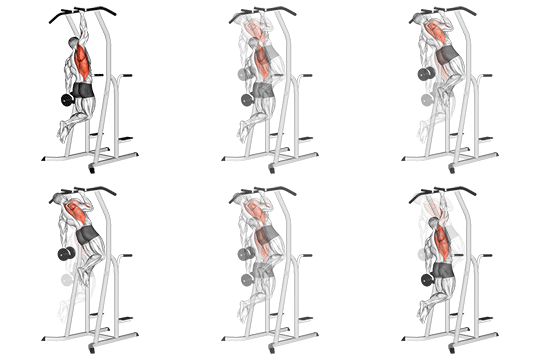
Strict Muscle-up
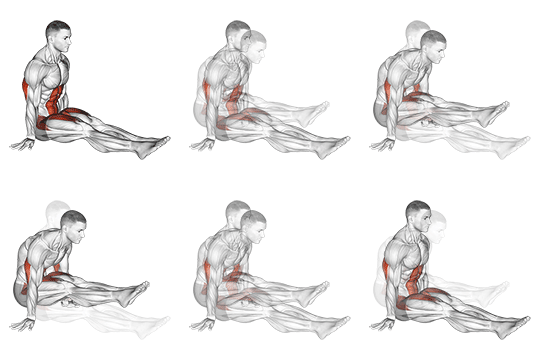
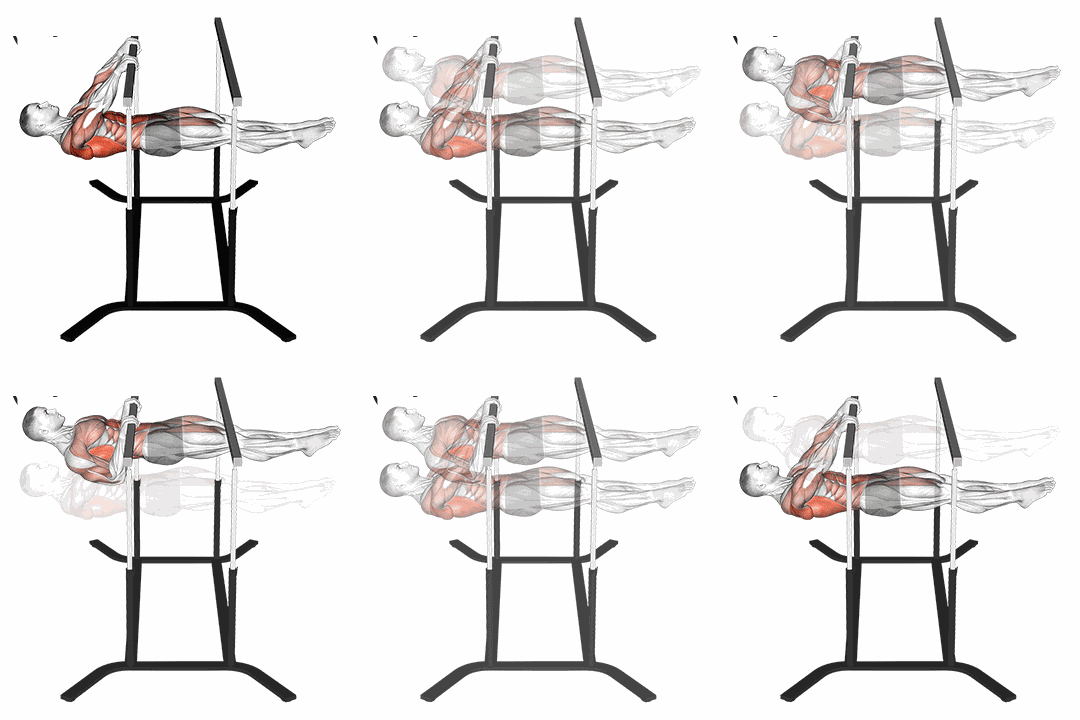
Human Flag
Tuck Planche Hold
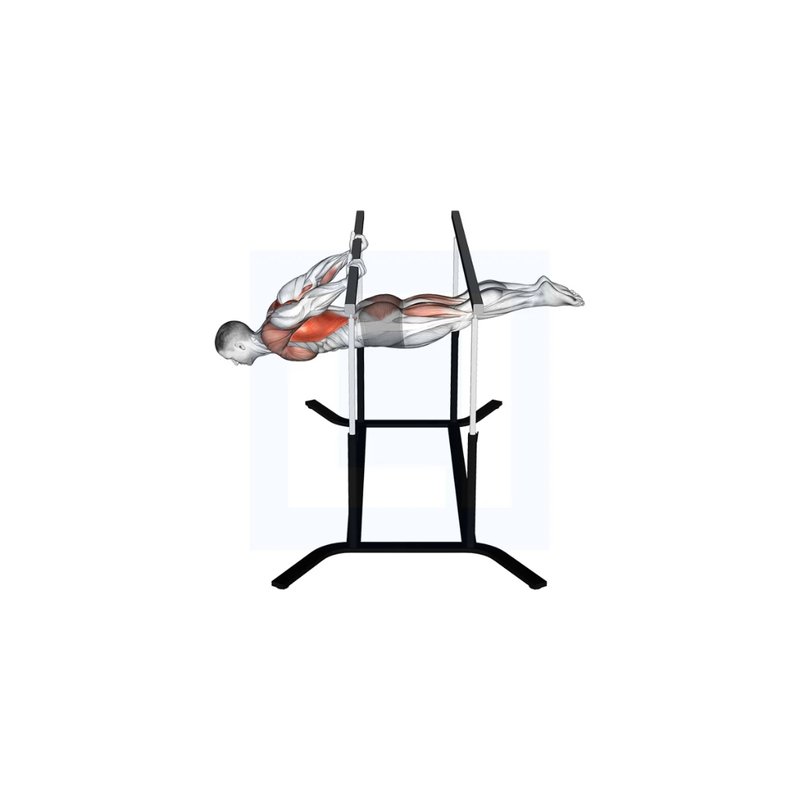
Full Front Lever
Twenty-eight achievements across five rarities, a streak that breaks if you miss a day, and a feed where your friends see your sessions. Adherence is the factor that correlates most with progress, so it is treated as a product feature.
Training, nutrition, recovery, science, mobility and mindset. Written so you read them once and change something.
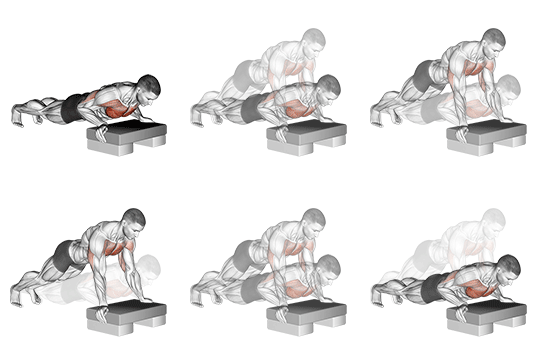
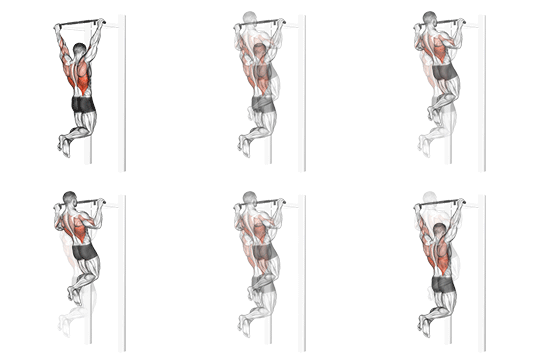
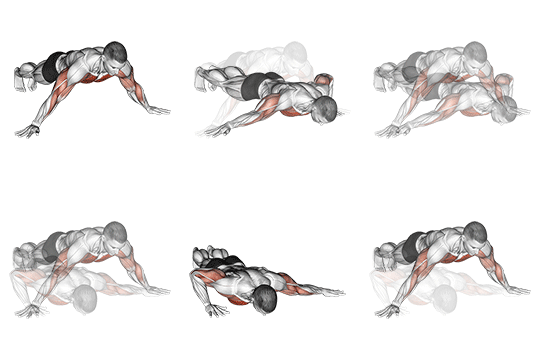
Workout logging, premade routines, the full library and the social feed are free, with ads. Pro removes the ads and unlocks AI generation and physique analysis.
No. The floor, a wall and a chair count as universal equipment, and there are enough exercises to train all four chains with nothing else.
When you tick that you have a pull-up bar, parallettes, rings, a stall bar, an ab wheel or bands, the catalogue expands and the AI starts using them. If you lose access to something, untick it and the routines regenerate with whatever you do have.
The download, workout logging, the full library of 103 exercises with their tutorials, the premade routines and plans, the strength test with its history, achievements, streaks and the social feed. All of that is free forever and is funded by ads.
Pro removes the ads and unlocks the two features that genuinely burn AI: personal plan generation and physique analysis. When you create your account you get one AI-generated plan free, so you can see what it produces before deciding.
It receives five things: your score per chain (push, pull, legs, core), the equipment you have ticked, the days of the week you train, the minutes per session and your recent session history. From that it builds the structure of the plan — which exercises, in what order, with how many sets, reps and rest periods.
The practical difference from a template is that two people at the same "intermediate level" get different plans if one has 70 in push and 40 in pull and the other is the reverse. And when you retake the test, the plan is rewritten.
Every six to eight weeks is sensible. Sooner than that and day-to-day noise — sleep, food, accumulated fatigue — weighs more than the actual improvement.
The app tells you when it is due. You can also retest earlier if you have changed your routine a lot or you are coming back after a long break.
They are used to generate the analysis and nothing else. They are not posted to the feed, no other user sees them, and they are not used to train models.
The analysis is processed by MediaPipe Pose for body geometry and by the Gemini and DeepSeek models for interpretation. You can delete your account and all of its data from the app itself or from the account deletion page.
Not yet. The app is built with Capacitor, so porting it is technically possible, but one person writes it and right now the effort is going into Android.
There is a web version that runs in any browser and works for trying the app out, although physique analysis and notifications only work on Android.
Take the test, look at your score, and have your first generated routine in under half an hour.
Free download · Pro optional from €4.99/month