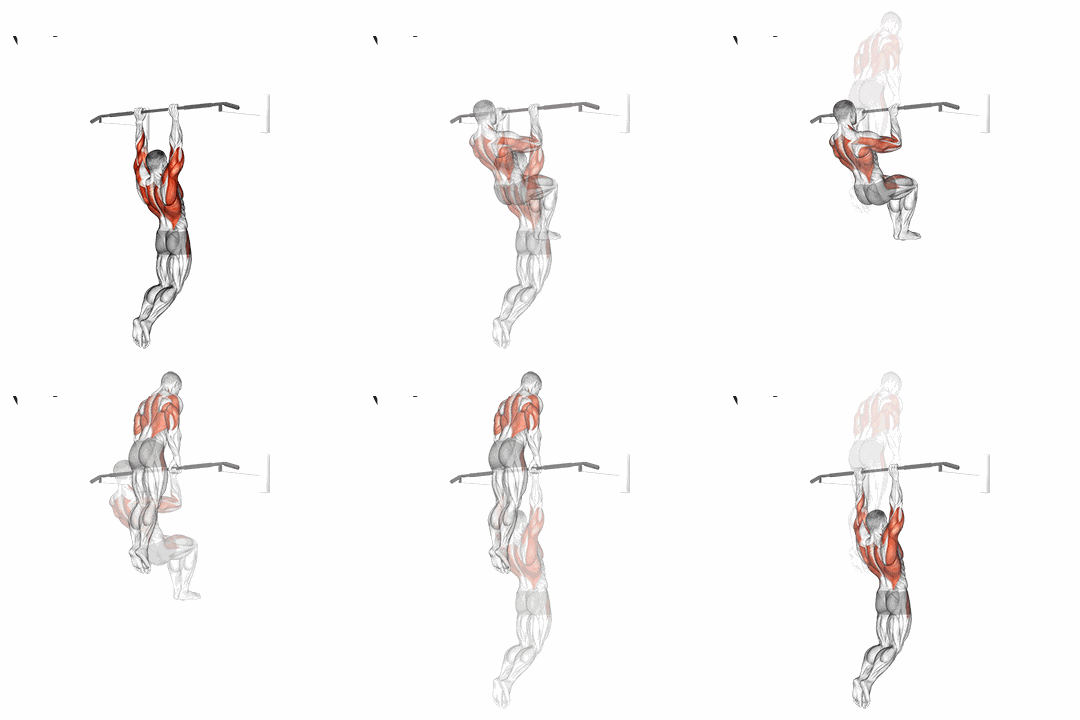
Almost everyone who attempts the muscle up reaches the same point: the chest touches the bar, the body hangs in front of it, and there is no way over. That is the transition, and it is where 90% of people get stuck.
The cause is almost never the transition itself. It is that the pull never got high enough or fast enough to leave time for the wrists to turn.
The real prerequisites
Before attempting it seriously, these are the marks that make the muscle up a question of technique rather than strength:
| Exercise | Minimum mark | Why |
|---|---|---|
| Strict pull-ups | 8-10 clean | Base of vertical pulling |
| Chest-to-bar pull-ups | 3-5 | Proof the pull reaches high |
| Parallel bar dips | 10-12 | The second half of the movement |
| Explosive pull-up | Release the bar by 10 cm | Power, not just strength |
The three phases, and what fails in each
Phase 1: the explosive pull
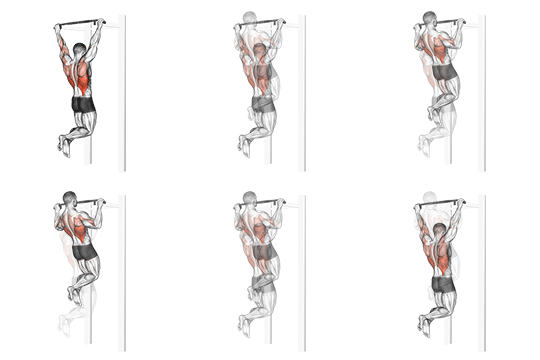
From an active hang, the pull has to be as violent as you can make it, not controlled. The goal is not to raise your chin: it is to get your chest past the bar with the body still rising, so there is a moment of weightlessness in which the hands can reposition.
What fails: pulling straight up. The body has to trace an arc — slightly back at first, forward at the end — because the bar is in the way and the body has to travel around it, not through it.
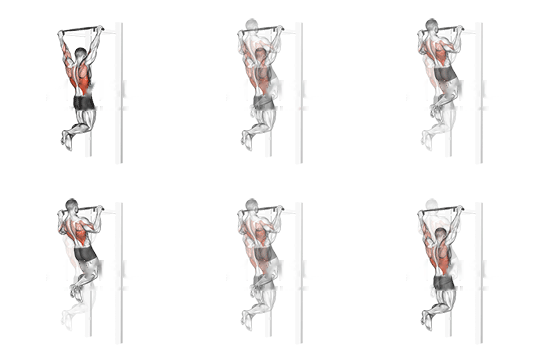
Phase 2: the transition
It lasts half a second. The wrists rotate from under the bar to over it, and the torso goes from vertical to leaning forward. Two things train it: false grip and transition negatives.
False grip: placing the wrist over the bar from the start, with the forearm bone resting on it. It removes the rotation during the movement at the cost of being very uncomfortable at first. On rings it is practically mandatory; on a bar it is optional but it speeds learning up a lot.
Transition negative: get into support above the bar and lower slowly through the transition position, resisting. It is the most direct way to teach the shoulder where it needs to be.
Phase 3: the dip
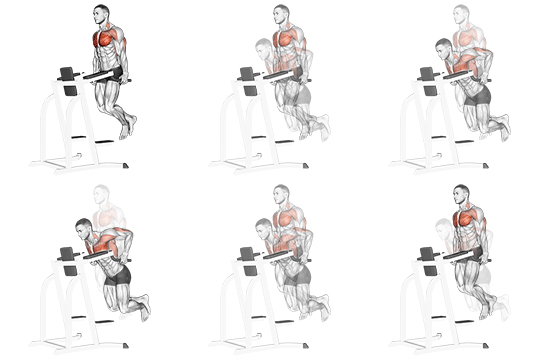
Once you are up with bent elbows, all that is left is extending them. If you have ten parallel bar dips, this part will not fail you. If you do not, the muscle up will collapse exactly when you thought you had it.
Kipping: when yes and when no
Kipping — using leg and hip swing to generate momentum — gets you the muscle up months earlier. It also means you got it without the strength the strict movement demands.
Using it as an intermediate rung is reasonable: it teaches the path and the feel of the transition. Making it your permanent technique means that a year from now you still will not have a strict one, and that your shoulder is absorbing an impact you do not control.
If your muscle up needs a bigger and bigger swing to come out, you are not progressing: you are compensating.
Programming
The muscle up is trained fresh, at the start of the session, in very short sets with long rests. It is a power movement, and power disappears with fatigue.
- Muscle up attempts: 5-6 sets of 1, with 3 minutes rest
- Explosive pull-ups: 4 × 3-5
- Transition negatives: 3 × 3
- Weighted or slow parallel bar dips: 3 × 6-8
- False grip work: 20-30 s hangs at the end
Two sessions a week. More does not help: the wrists and elbows need the rest more than the muscles do.
Mistakes that cost months
- Attempting it tired. There is no power at the end of a back session. It turns into rehearsing the failure.
- A bar that is too low. If you have to tuck your legs, you are changing the mechanics. You need to hang free.
- Skipping the dip. The top half gets trained far less than it should, and it is what decides whether the attempt completes.
- Going to rings before the bar. On rings the transition is more natural but the stability demand is much higher. Bar first.
- Not warming the wrist. False grip loads the wrist in an unusual position. Two minutes of mobility avoids a three-month tendinopathy.
How long it takes
From ten clean pull-ups and ten clean dips: between two and six months. From five pull-ups, the first job is raising that number — attempting the muscle up on five pull-ups is training frustration.
The full muscle up progression has the whole chain rung by rung, with the exit criterion for each one.