Plank Hold
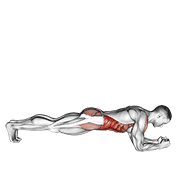
The isometric plank is the most fundamental core-stabilization exercise in calisthenics. You hold a horizontal plank on forearms and toes with the entire core firing isometrically against gravity for the target time.
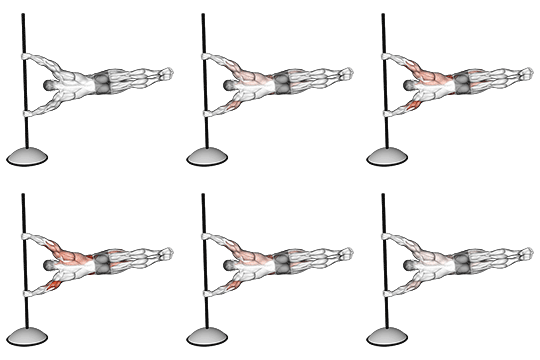
The hardest skill in basic calisthenics. It depends on extreme scapular protraction and on prepared tendons, so the progression is long on purpose: connective tissue takes months to adapt even when the muscle is already there.
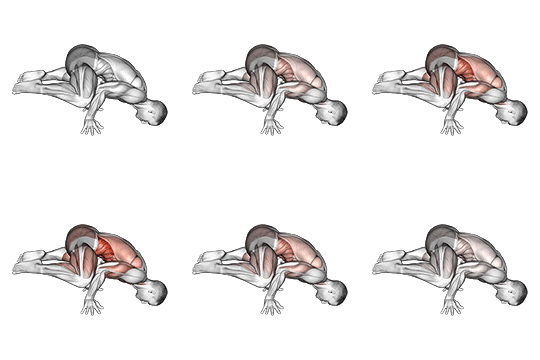
Tuck Planche Hold
Hold the body parallel to the floor supported only on your hands, arms straight.
Bottom to top. Meet the criterion for one rung before touching the next.
The isometric plank is the most fundamental core-stabilization exercise in calisthenics. You hold a horizontal plank on forearms and toes with the entire core firing isometrically against gravity for the target time.
Pseudo planche push-ups (PPPU) are a push-up variant with hands rotated outward and maximal forward lean, simulating planche load while the feet stay on the floor. One of the most effective and popular planche-building drills.
The planche lean is the first real step toward the gymnastic planche. From a push-up plank you lean forward until the shoulders sit several centimeters in front of the hands, simulating the gravitational load of a true planche.
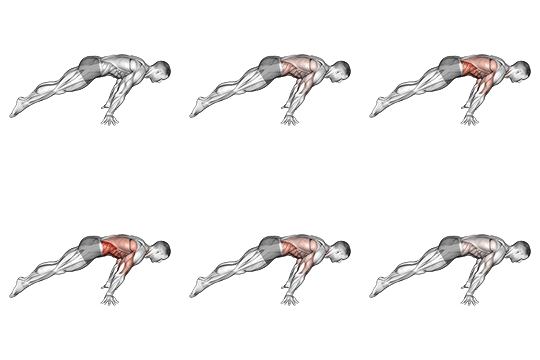
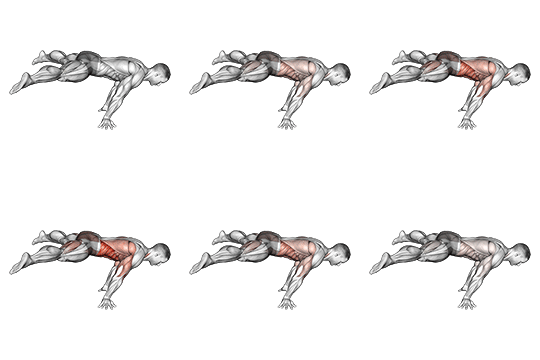
The tuck planche hold is the first true static planche position. You support the body parallel to the floor with knees tucked to the chest, weight solely on the hands.
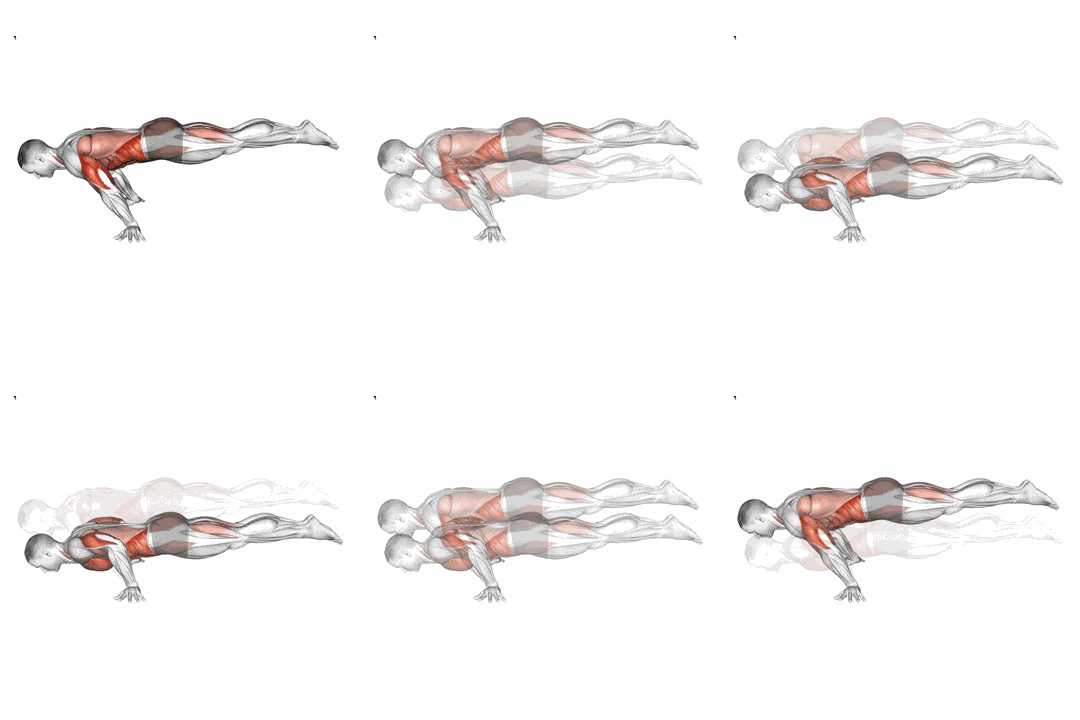
The straddle planche push-up is a full push-up performed in a straddle planche (legs in a horizontal V, body parallel to the floor). A gymnastics-level move combining the straddle planche hold with dynamic pressing strength.
Take the test, look at your score, and have your first generated routine in under half an hour.
Free download · Pro optional from €4.99/month